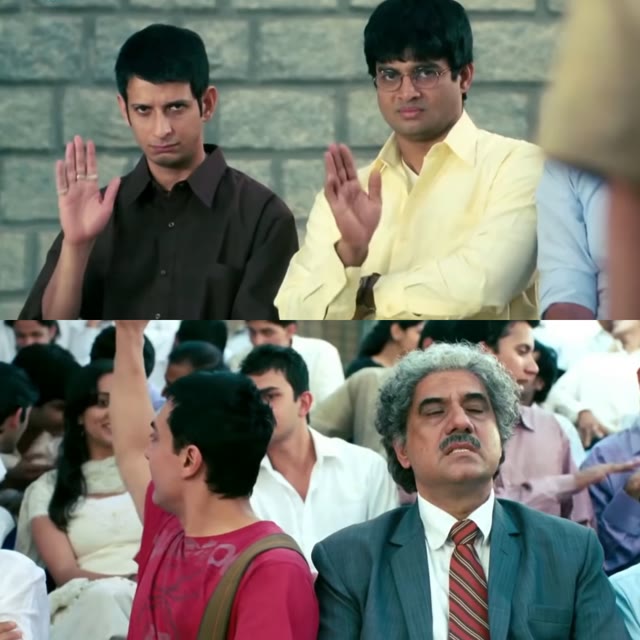
man taking a stand in a town hall meeting Meme Template
About this meme
Template Name
Freedom of Speech / Norman Rockwell Standing Man / The Unpopular Opinion / Town Hall Dissenter / Norman Rockwell Brave Statement Meme
Origin
This ubiquitous image is the first of the four famous oil paintings in the Four Freedoms series (1943) by legendary American illustrator and artist Norman Rockwell, inspired by President Franklin D. Roosevelt's 1941 State of the Union Address.
The painting depicts a 1942 Town Hall meeting in Arlington, Vermont, where a local blue-collar worker named Jim Edgerton (modeling as the dissenter) stands up to voice a wildly unpopular opinion regarding a school tax proposal. Even though his neighbors disagreed with him, the meeting gave him the floor as a matter of protocol, illustrating the democratic ideal of free speech. The series of paintings was published in The Saturday Evening Post and toured the country, helping raise over $132 million in war bonds during World War II.
Around 2021 on Twitter/X, Reddit (r/ExplainTheJoke, r/dankmemes, r/trippinthroughtime), and Tumblr, the image was heavily adopted as an exploitable "brave statement" or "unpopular opinion" macro. The standing worker has been labeled with various wildly niche, controversial, or absurdly unpopular takes on pop culture, gaming, food, or lifestyle habits, with his neighbors representing a stunned or skeptical public.
Key Vibes
Voice of the people, fighting for an unpopular take, absolute confidence, "somebody had to say it," and defending a controversial hill.
Visual Breakdown
- The Dissenter (Center): A tall, lean blue-collar worker (Jim Edgerton) in a worn, slightly rumpled brown suede jacket over a blue plaid flannel shirt, with a folded booklet tucked into his side pocket. He looks upward with an honest, determined, and open-mouthed expression as he addresses the town hall.
- The Listener Crowd: Older and middle-aged townsfolk—including men and women, both in suits and ties as well as casual everyday clothes—turned around on wooden benches to give the speaker their rapt attention, with some looking skeptical, curious, or respectful.
- The Artwork: Done in Rockwell’s hallmark warm, cinematic oil illustration style with textured shading, high-contrast spotlighting, and a naturalistic, earthy palette.
- The Composition: Shot from an upward angle (bench level) to elevate the standing worker, emphasizing his courageous gesture against a densely populated backdrop.
Description Paragraph
The enduring humor of the Norman Rockwell "Freedom of Speech" meme is rooted in its subversion of heavy-handed patriotism. Rockwell’s painting was intended as a serious, earnest tribute to one of the most sacred rights in democratic society—the freedom to speak your mind without fear. In online culture, this monumental gravity is hilariously mapped onto completely trivial, everyday debates. Putting aside global politics, creators use the image to depict themselves as noble, lone crusaders bravely speaking truths that the "world isn't ready to hear"—such as confessing that they actually liked a heavily criticized movie, prefer a widely hated food, or think a beloved digital feature is vastly overrated. It gives every minor pet peeve the aesthetic of a historical fight for liberty.
Popular Caption Ideas
- "Me standing up at the family meeting: 'I think we shouldn't have to eat the leftovers on day three.'"
- "Standing: 'We don't need a sequel to that movie.' // Crowd: [Stunned silence]"
- "The guy in the casual jacket: 'The game was actually better before the massive updates.'"
- "Me at 2:00 AM defending a poorly received album on social media like my life depends on it."
- "That one friend boldly declaring: 'Pineapple belongs on pizza, and I'm not apologizing.'"